Crafting Meaningful Milestones: The Evolving Role of 100 Days of School T Shirt Design in Education and Creative Commerce
For decades, the 100th day of school has served as a quiet but powerful cultural touchstone—marking perseverance, routine, and collective growth in early education. What began as a simple classroom celebration has evolved into a multidimensional creative opportunity, anchored by one versatile artifact: the 100 Days of School T Shirt Design. Today, this design concept extends far beyond cotton tees. It fuels a robust ecosystem of print-on-demand (POD) products—from hoodies and tote bags to yoga mats and phone cases—each carrying pedagogical resonance and aesthetic intention.
From Classroom Ritual to Cross-Platform Creative Asset
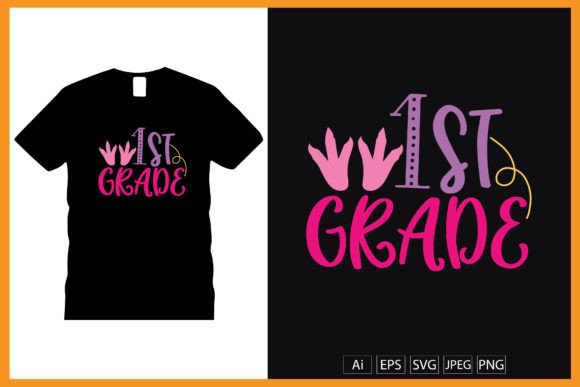
The 100 Days of School T Shirt Design is no longer just a novelty garment. It functions as a modular visual system. Its core strength lies in adaptability: a single well-crafted vector file—available in high-resolution PNG, JPG, EPS, and SVG formats—can scale cleanly across diverse substrates and product types. Unlike raster-only graphics that blur on large-format prints like posters or bedsheets, vector-based 100daysofschooltshirtdesign assets retain crisp edges whether rendered at 3 inches on a sticker or 48 inches across an all-over-print hoodie.
This scalability matters deeply for creators and small businesses. A teacher designing custom apparel for her first-grade class can use the same SVG file to order matching socks, classroom posters, and reusable tote bags—ensuring visual consistency without reworking layouts. Similarly, a POD entrepreneur launching a back-to-school collection can deploy one cohesive design suite across 15+ SKUs, minimizing production overhead while maximizing thematic unity.
Design Intelligence Behind the Simplicity
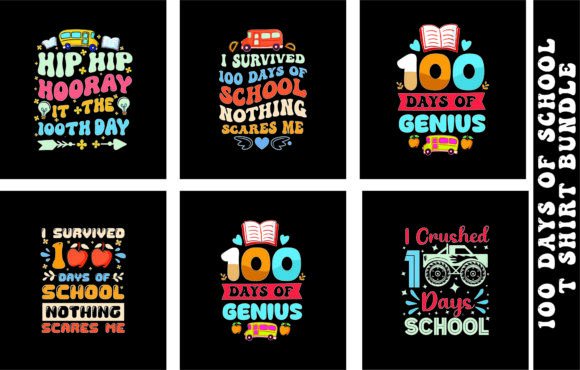
Effective creativenew100daysofschooltshirt concepts balance clarity with expressive nuance. Top-performing designs avoid over-cluttered numerals or generic confetti motifs. Instead, they integrate thoughtful typography, intentional negative space, and layered meaning. For example:
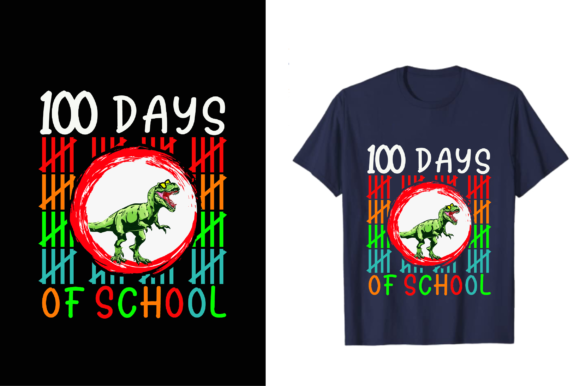
- A minimalist “100” rendered in stacked blocks—each block representing a day—with subtle icons (an apple, a book, a pencil) embedded within individual numerals;
- A vintage-inspired badge layout using distressed textures and serif typography, evoking mid-century school ephemera while remaining legible on a mug or fanny pack;
- An abstract geometric interpretation where “100” emerges from interlocking triangles and circles—ideal for all-over-print yoga mats or scarves, appealing to older students and educators alike.
These are not merely decorative choices. They reflect typographytshirtdesign principles grounded in readability, hierarchy, and context-aware contrast. A design intended for a toddler’s t-shirt prioritizes bold, rounded fonts and high-contrast color palettes; the same concept adapted for a teacher’s coffee mug might shift to refined serifs and muted earth tones—demonstrating how audience and medium shape execution.
Real-World Applications Across User Groups
Different stakeholders leverage the 100daysofschooltshirtdesign in distinct, practical ways—each revealing its functional versatility.
Educators and Administrators
Schools use these designs to foster community identity and reinforce learning milestones. A coordinated set of t-shirts, stickers, and classroom banners transforms the 100th day from a one-off event into an immersive experience. Teachers report increased student engagement when learners wear shirts featuring personalized numbers (“I counted 100 buttons!” or “100 Acts of Kindness”)—making abstract numeracy tangible. Importantly, many districts now source these items via ethical POD platforms, avoiding bulk inventory risk while supporting local PTA fundraising.
Independent Designers and Print-on-Demand Sellers
For creatives, this niche offers strong seasonal demand with low saturation—especially when moving beyond basic text. Designers who specialize in artdesign schooldesignconcept report higher conversion rates when their listings include mockups showing the same graphic on multiple products: a child wearing the tee, a parent holding the matching tote, and a teacher sipping from the mug—all reinforcing cross-product appeal. Successful sellers also tag thoughtfully: pairing broad terms like tshirtgraphic with specific long-tail variants such as vintagetshirt or creativeshirt improves discoverability across varied search behaviors.
Families and Gift-Givers
As a 100 days of school gift item for print on demand, these products fulfill emotional needs beyond utility. Grandparents order embroidered backpacks with celebratory motifs; siblings receive matching socks with “Day 100 Squad” lettering; homeschooling families use bedsheet prints to mark academic rhythm. The act of gifting becomes symbolic—a visible acknowledgment of sustained effort, especially valuable for neurodiverse learners who thrive on structured recognition.
Technical Considerations for Optimal Output
Not all files perform equally across POD workflows. Understanding format strengths prevents costly misprints:
- PNG: Best for designs with transparency (e.g., cut-out numerals over photo backgrounds), ideal for stickers and phone cases. Avoid for large-area fabric printing unless resolution exceeds 300 DPI at full size.
- JPG: Widely accepted but lacks transparency support. Use only for solid-background applications like posters or mugs where edge blending isn’t critical.
- EPS & SVG: Essential for scalable vector use. SVG dominates web-based mockup tools and digital previews; EPS remains preferred by some professional garment printers for embroidery digitizing.
Color mode is equally vital. RGB suffices for screen previews and most direct-to-garment (DTG) printers, but CMYK-prepped files reduce hue shifts on offset-printed items like posters or tote bags. Savvy designers embed Pantone references in layered PSD files—even if not delivering them—to guide brand-consistent color matching across product lines.
Beyond the T-Shirt: Strategic Product Expansion
The original 100daysofschooltshirtdesign serves as a foundational motif—not a limitation. Its real value emerges in adaptation:
- All-Over-Print Hoodies: Repeating “100” patterns or fragmented numeral motifs create dynamic movement, turning outerwear into wearable art.
- Face Masks & Scarves: Smaller-scale iterations—like a single stylized zero repeated in tessellation—maintain recognizability while suiting textile grain and breathability requirements.
- Backpacks & Fanny Packs: Placement matters. Designs centered on front panels work for quick recognition; side-panel wraps or zipper pulls offer subtler branding opportunities favored by middle- and high-school students.
- Yoga Mats & Bedsheets: These demand low-contrast, non-distracting variations—think tone-on-tone embossed textures or faint watermark-style numerals—that support focus during learning or rest without visual fatigue.
This expansion reflects a broader shift: education-themed design is maturing beyond juvenile tropes. It now embraces sophistication, inclusivity, and material intelligence—aligning with how modern learners and educators engage with symbolism.
Future-Forward Considerations
Emerging trends point toward deeper integration. Augmented reality (AR)-enabled posters let students scan a “100” graphic to trigger animations counting objects in real time. NFC-tagged tote bags link to digital portfolios showcasing 100-day projects. Meanwhile, eco-conscious POD providers now offer GOTS-certified organic cotton tees and recycled polyester for hoodies—meaning the 100daysofschooltshirtdesign can embody sustainability values visually and materially.
For researchers studying educational ritual, these artifacts serve as data points in cultural semiotics—how symbols accrue meaning across generations. For hobbyists, they’re accessible entry points into vector illustration and color theory. And for business owners, they represent a rare convergence: predictable demand, low customer acquisition cost, and high emotional ROI.
Ultimately, the 100 Days of School T Shirt Design endures because it honors process over outcome. It doesn’t celebrate perfection—it celebrates persistence. Whether printed on a child’s first hoodie or embroidered onto a veteran teacher’s scarf, it affirms that showing up, day after day, is itself a creative act worthy of design, distribution, and quiet celebration.