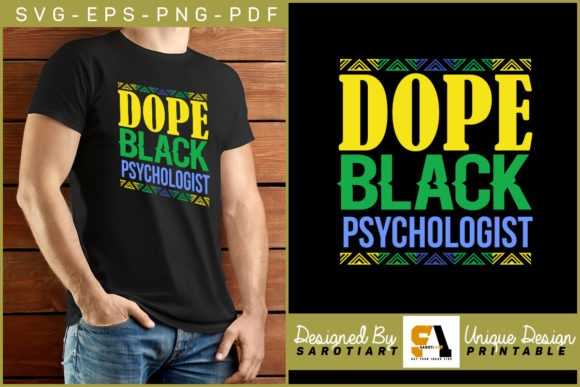
Dope Back Psychologist T-shirt Design
For school psychologists, mental health educators, and allied professionals, visibility matters—not as self-promotion, but as intentional presence. The Dope Back Psychologist T-shirt Design isn’t just apparel—it’s a calibrated communication tool. Designed by Sarotiart under the “DOPE BACK PSYCHOLOGIST” concept, it merges professional identity with approachable authenticity. It signals competence without rigidity, warmth without dilution, and advocacy without abstraction. When worn in schools, conferences, or community spaces, it opens doors to conversation before a single word is spoken.
Why Strategic Use Matters More Than Aesthetic Alone
A design like Dope Back Psychologist T-shirt Design gains value only when aligned with purpose—not trend. Consider this: a school psychologist wearing it during parent-teacher conferences may lower perceived barriers for families unfamiliar with psychological support. A graduate student wearing it at a national conference might spark mentorship opportunities rooted in shared values. But if used without intention—say, printed on low-quality fabric and worn inconsistently—it risks blending into visual noise rather than standing out with meaning.
The real leverage lies in how the design functions across contexts. Its bold typography and confident tone (“Dope Back”) speak to resilience and cultural fluency—qualities increasingly vital in education and clinical settings where trust must be earned quickly and authentically. That doesn’t mean it replaces clinical skill or ethical practice. Rather, it amplifies them—like a well-designed slide deck supports a strong presentation, not substitutes for substance.
Practical Applications Beyond the T-Shirt
What makes the Dope Back Psychologist T-shirt Design especially valuable is its versatility as a digital asset. You receive EPS, SVG, PDF, and PNG files—formats that support precision scaling, clean vector editing, and high-resolution printing. This means you’re not limited to apparel. Here’s how thoughtful users apply it:
- Classroom posters: Printed large and mounted near counseling offices or wellness corners, reinforcing identity and accessibility for students.
- Invitations & event branding: Integrated into back-to-school night flyers or mental health awareness week materials—consistent visuals build recognition and legitimacy.
- Social media banners: Used across Instagram, LinkedIn, or school district platforms to unify messaging around staff expertise and student support initiatives.
- Stickers & handouts: Applied to notebooks, resource cards, or take-home toolkits—small touches that extend reach beyond face-to-face interactions.
- Team swag for training cohorts: When facilitating workshops for teachers or paraeducators, matching shirts signal cohesion and shared mission—without requiring formal uniforms.
Each use case reflects planning—not impulse. For example, choosing SVG over PNG for a banner ensures crisp rendering at any size; selecting EPS for screen printing guarantees color fidelity across vendors. These aren’t technical footnotes—they’re operational decisions that affect consistency, scalability, and long-term brand coherence.
When to Deploy—and When to Pause
Timing and context shape impact. Launching the Dope Back Psychologist T-shirt Design during Mental Health Awareness Month aligns with broader narratives and increases resonance. Using it during school board presentations—paired with data on student well-being outcomes—grounds symbolism in evidence. But deploying it in isolation, without follow-up action or explanation, can create dissonance. If students see the shirt but never experience accessible support, the design becomes ironic—not empowering.
Also consider audience readiness. In districts where mental health roles are still being defined or misunderstood, pairing the design with brief explanatory language (“Psychologists support learning, behavior, and emotional growth”) adds clarity. In contrast, at an APA convention, minimal context may suffice—the audience already shares foundational understanding.
Decision-Making Guidance for Creators and Buyers
If you’re evaluating whether this design fits your goals, ask three questions:
- Does it reflect who we are—not who we wish we were? Authenticity builds credibility faster than polish. If “dope” feels culturally misaligned with your team’s voice, adapt or look elsewhere—even if the design is visually striking.
- Do we have infrastructure to support consistent use? Files are delivered instantly—but printing partnerships, budget for bulk orders, or internal approval processes may lag. Map those dependencies first.
- What outcome do we want to move? Is it increased referrals? Stronger peer collaboration? Student engagement in wellness programming? Let that answer drive placement, frequency, and companion messaging—not assumptions about what “looks cool.”
Remember: digital files are tools—not solutions. Owning the Dope Back Psychologist T-shirt Design gives you flexibility, but execution determines effectiveness. One school psychologist ordered 20 shirts for her team, then co-created a “Meet Your Psychologist” bulletin board using the same design elements—linking visual identity to relational transparency. Another used the SVG file to animate a short intro video for virtual parent nights. Neither required extra budget—just focused intent.
Risks of Unintentional Use
Without grounding in goals, even strong designs can backfire. Printing the Dope Back Psychologist T-shirt Design on mismatched colors or inconsistent sizing across staff unintentionally communicates disorganization—not confidence. Using it exclusively for internal wear while avoiding public-facing applications (e.g., school websites, newsletters) limits its utility as a bridge between roles and communities.
There’s also the risk of symbolic overload. If every department adopts its own “dope”-branded gear without coordination, the message fragments. Clarity emerges from alignment—not volume. Ask: Does this reinforce our core priorities, or does it compete with them?
Long-Term Value Lies in Integration, Not Isolation
The Dope Back Psychologist T-shirt Design holds lasting value when treated as one node in a larger ecosystem of communication. Think of it like typography in a brand system: powerful alone, but transformative when paired with voice, tone, imagery, and action. Over time, consistent, thoughtful use helps shift perceptions—not overnight, but incrementally.
One district reported that after introducing psychologist-branded apparel (including this design) alongside classroom lessons on emotional regulation, teacher referrals for behavioral support rose 32% year-over-year—not because shirts changed behavior, but because they normalized conversations previously avoided. The design didn’t replace curriculum or training. It made space for both to land more effectively.
That’s the quiet power of intentional design: it doesn’t do the work for you, but it removes friction from doing the work well.
Final Thought: Start Small, Stay Aligned
You don’t need to launch across all channels at once. Begin with one high-impact use—perhaps a set of shirts for your immediate team, paired with a short internal briefing on why the language and visuals matter. Track reactions. Refine. Then expand: add a poster in the main hallway. Embed the logo in your next newsletter footer. Each step reinforces coherence.
The Dope Back Psychologist T-shirt Design works best not as decoration, but as deliberate punctuation—marking where expertise meets approachability, where advocacy meets action, and where identity supports impact. When chosen with care, edited with precision, and deployed with purpose, it becomes more than a graphic. It becomes part of your professional grammar.