Back 2022 to School
“Back 2022 to School” isn’t just a nostalgic phrase—it’s a functional mindset shift. For professionals, educators, creators, and small business owners, it represents intentional re-engagement: resetting priorities, revisiting foundational tools, and aligning daily work with long-term goals. Unlike seasonal back-to-school campaigns aimed at students, this version is for adults who treat learning, design, branding, and workflow refinement as continuous practices—not one-off events. It’s about recognizing that high-quality creative assets—like typography-driven t-shirt designs—don’t exist in isolation. They’re part of a larger system: planning, production, adaptation, and consistent delivery.
Where “Back 2022 to School” Fits in Real Workflows
In practice, “Back 2022 to School” functions as a deliberate pause before execution. It’s the moment you step back from urgency to ask: What do I actually need—not just want—to move forward efficiently? For a freelance designer launching a new collection, it means auditing file formats, color systems, and scalability requirements before opening Illustrator. For an educator creating classroom apparel, it’s verifying print compatibility across vendors. For a small business owner building brand merchandise, it’s confirming that every design asset supports both light and dark garment bases without manual rework.
This mindset applies equally before a project begins (to clarify scope and technical constraints), during active development (to troubleshoot inconsistencies or bottlenecks), and after launch (to evaluate usability, adaptability, and reuse potential). It’s not about starting over—it’s about returning to fundamentals with updated context and clearer intent.
Design Assets That Support Intentional Workflow
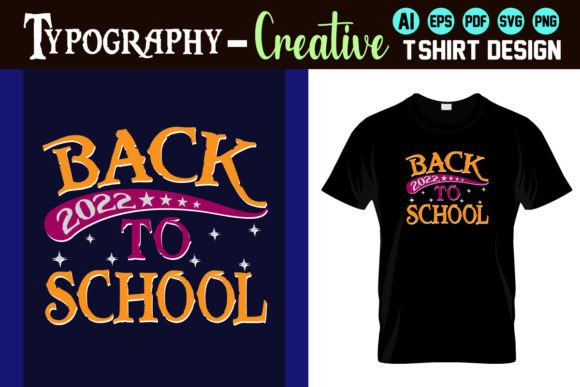
A well-structured t-shirt design—especially one built around strong typography, vintage sensibility, and graphic clarity—isn’t just visually effective. It’s engineered for integration. The “Back 2022 to School” ethos shines here: when a design includes vector-based, fully editable layers, standardized dimensions (4500×5400 px), and multi-format exports (EPS, SVG, PNG transparent, JPG mockup), it eliminates friction at every stage of use.
Consider how this works across roles:
- Marketers drop the EPS file directly into layout software, adjust colors to match campaign palettes, and export variants in under two minutes—no designer handoff required.
- Educators import the SVG into Canva or Google Slides to resize cleanly for posters, newsletters, or digital announcements—keeping typographic integrity intact.
- Small business owners upload the PNG transparent file to print-on-demand platforms and instantly preview on black, navy, heather grey, or white tees—no test prints needed.
- Freelancers reuse the same base design across client projects by swapping fonts, adjusting spacing, or layering custom icons—all while preserving 300 dpi resolution and vector fidelity.
That level of interoperability doesn’t happen by accident. It’s the result of disciplined preparation: choosing scalable vector workflows over raster-only files, standardizing canvas size and DPI across deliverables, and designing with contrast, legibility, and garment context in mind—not just screen appeal.
Practical Integration: How to Use This Design in Your Routine
You don’t need to overhaul your process to benefit. Start small—and intentionally:
- Before ordering prints: Open the EPS file in Adobe Illustrator (or Affinity Designer), select all text layers, and apply your brand’s primary color swatch. Export a new version named “Dark_Tee_Version” in seconds.
- When testing mockups: Drag the PNG transparent file into a free online mockup generator (like Placeit or Smartmockups). Because it’s 4500×5400 at 300 dpi, it renders crisply—even on ultra-high-res product previews.
- During team collaboration: Share the SVG version with non-designers. It opens in browsers, Figma, and most CMS editors, letting copywriters or admins tweak sizing or placement without breaking outlines.
- For long-term asset management: Store the source EPS alongside a simple README.txt listing color codes used, font names (with licensing notes), and recommended minimum print sizes. Future-you will thank present-you.
Consistency compounds. Using one well-built file across multiple contexts reduces version sprawl, minimizes miscommunication, and keeps your output aligned—whether you're printing 50 shirts for a workshop or scaling to 500 for an online store launch.
Quality Control That Scales
High design quality isn’t measured only in aesthetics—it’s verified through usability. A “Back 2022 to School”–ready asset passes three practical tests:
- Resizability: Does it scale cleanly from a 2-inch chest logo to a full-back print without pixelation or stroke distortion? (Yes—because it’s built from 100% vector shapes.)
- Adaptability: Can you change every color—including shadows, outlines, and gradients—in under 60 seconds? (Yes—because all elements are layered, grouped logically, and color-coded in the source file.)
- Compatibility: Does it work across common platforms—print providers, web builders, presentation tools, and social media templates—without conversion loss? (Yes—because EPS, SVG, PNG transparent, and high-res JPG are included, each optimized for its intended use case.)
This kind of reliability matters most when timelines tighten, feedback loops accelerate, or stakeholder expectations shift mid-project. It turns reactive fixes into proactive adjustments.
Moving Forward—Without Starting Over
“Back 2022 to School” isn’t about nostalgia or repetition. It’s about bringing discipline, clarity, and intention to how you select, use, and maintain creative resources. When you choose a t-shirt design built for real-world application—not just visual impact—you invest in fewer bottlenecks, less revision fatigue, and more consistent results.
For professionals managing multiple projects, launching products, or supporting teams, that difference adds up: faster turnaround, fewer vendor callbacks, smoother client approvals, and reusable assets that retain value across quarters—not just seasons.
The next time you prepare for a new initiative—whether it’s a brand refresh, course launch, community event, or personal side project—apply the “Back 2022 to School” lens. Ask: Does this tool support my actual workflow—or just look good in isolation? If it’s the former, you’ve already saved time, reduced risk, and strengthened your output—before the first pixel is printed.